
A Madu Ganga tour is a circuit with fixed points. Almost every boat visits the same places in roughly the same order, which means the difference between operators is not where they go but how long they linger and how hard they sell.
Kothduwa Temple island
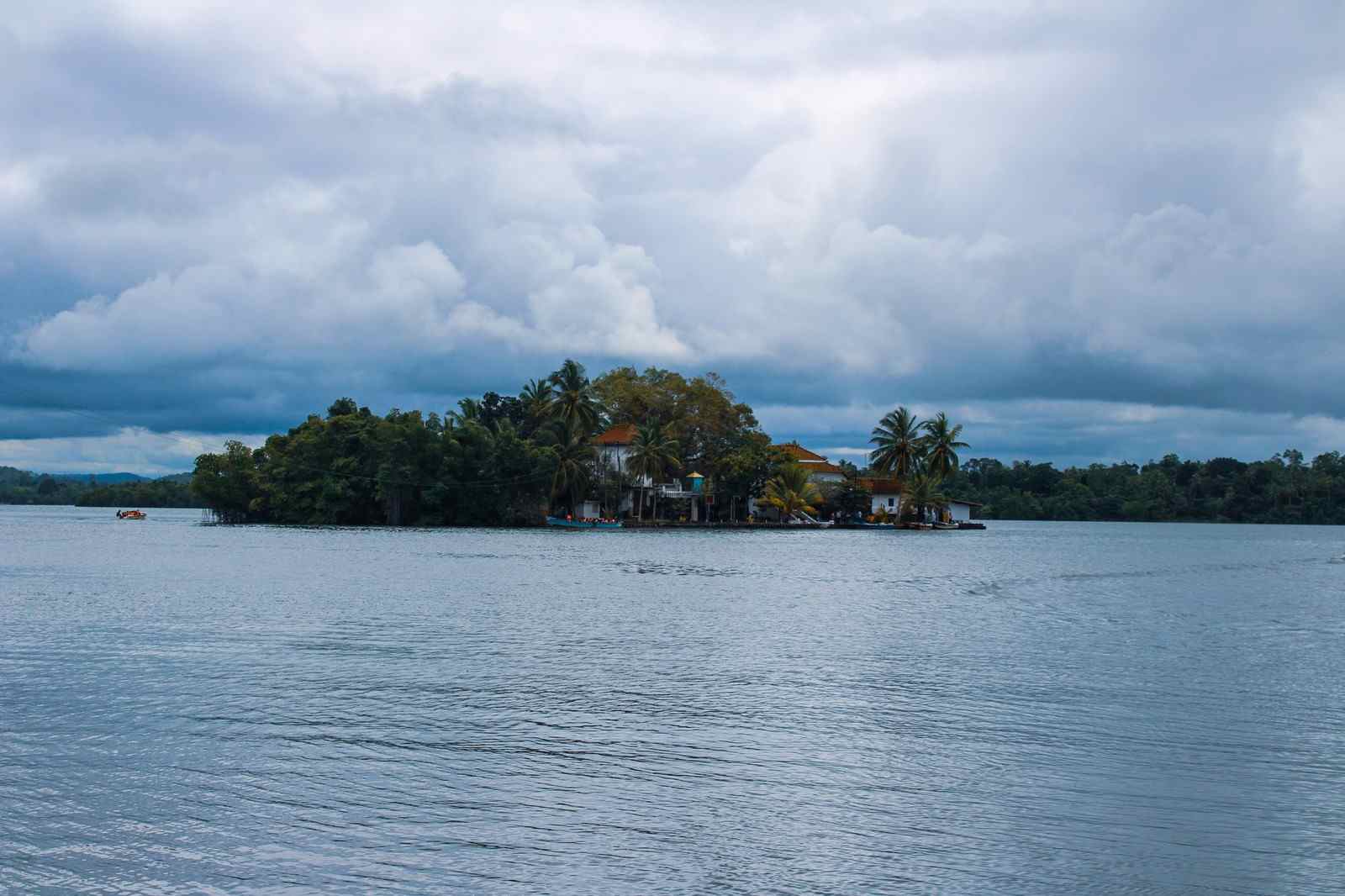
The one stop nobody regrets. Kothduwa sits alone on a wooded island, reached by a short jetty and a flight of steps under old trees. It is quiet in a way the rest of the trip is not.
The temple is tied to a significant moment in Sri Lankan Buddhist history: tradition holds that the Amarapura Nikaya held its first upasampada — higher ordination — on a fleet of boats anchored on this lagoon in 1803, because the established order controlled the ordination platforms on land. Whether or not every detail survives scrutiny, the association is why this small island temple carries more weight than its size suggests.
What to expect: a bo tree, a small shrine room, a resident monk, a donation box, and monkeys with an excellent understanding of unattended bags.
The cinnamon island
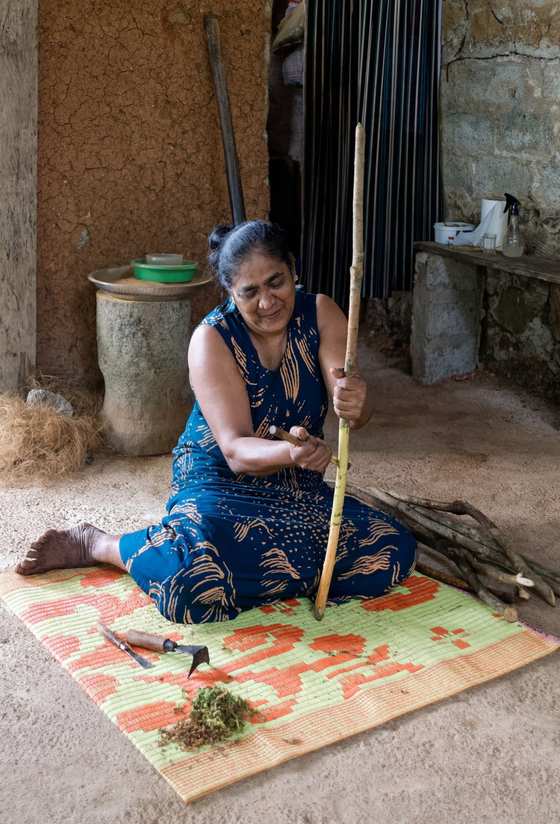
Sri Lanka produces the large majority of the world’s true cinnamon, Cinnamomum verum, and this coast is the heart of it. The stop is a smallholding where someone shows you how the bark is taken off.
The process is more skilled than it looks. A shoot is cut, the rough outer bark is scraped away, the inner bark is bruised with a brass rod to loosen it, then it is slit and peeled off in a single sheet. The sheets are nested inside one another and dried into quills. A good peeler produces long, pale, tightly rolled quills; a poor one produces broken bark that sells for a fraction of the price.
Is it a real farm or a shop? Look for these:
- Stacks of quills drying on racks, not just a basket on a table
- A peeling bench with worn brass rods and a pile of scraped offcuts
- Cinnamon leaf and bark oil being distilled, or at least the still standing there
- Someone doing the work who is clearly not the person selling to you
If all you see is a display board and a shelf of packets, you are in a shop. That is not a scandal — the family still earns from it — but you can decline to buy without any awkwardness.
The fish spa
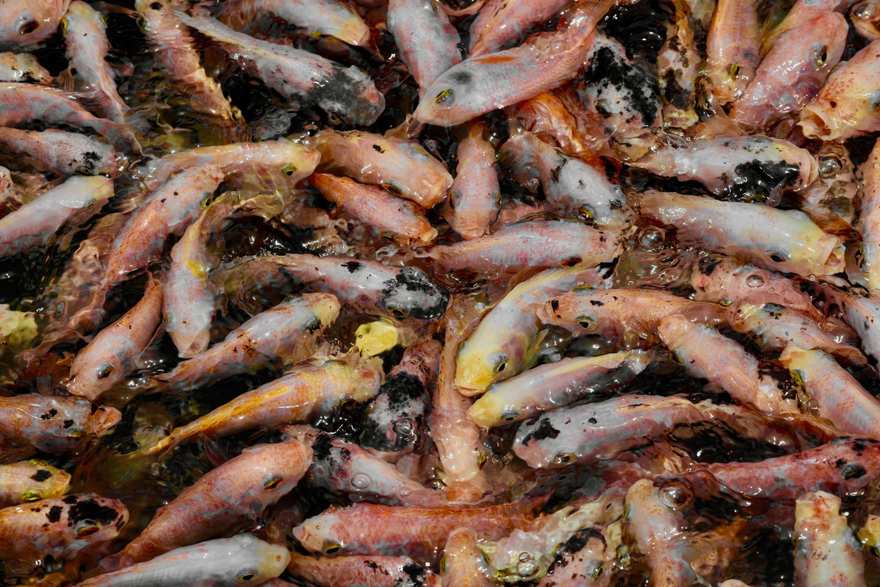
A floating pen with Garra rufa. You sit on the edge, put your feet in, and small fish nibble at dead skin for ten minutes. It is a novelty and it is charged separately from the boat.
Two practical notes. Do not do it with open cuts or broken skin. And if you dislike the sensation, you will dislike it within four seconds, so nobody minds if you take your feet out.
The floating shop
A moored boat or platform selling king coconut, cold drinks, snacks and souvenirs. Prices are what you would expect for a captive market on water. It exists because the trip is two hours long in the heat.
Bring your own water and it becomes optional. Buy a king coconut anyway if you have never had one — it is the best cold drink on this coast and it is served in its own container.
The prawn traps and fish fences
Not a stop, but the thing most worth asking about. Those angled wooden fences in the shallows are traditional traps: fish and prawns move with the tide, meet the fence, follow it along, and end up in a basket at the apex. They are set and cleared by families who have worked the same stretch of water for generations.
Crews almost never mention them because tourists never ask. Ask.
Islands you pass but do not land on
- Satha Paha Duwa — the smallest island in the lagoon, pointed out by every crew, essentially a patch of vegetation with a story attached.
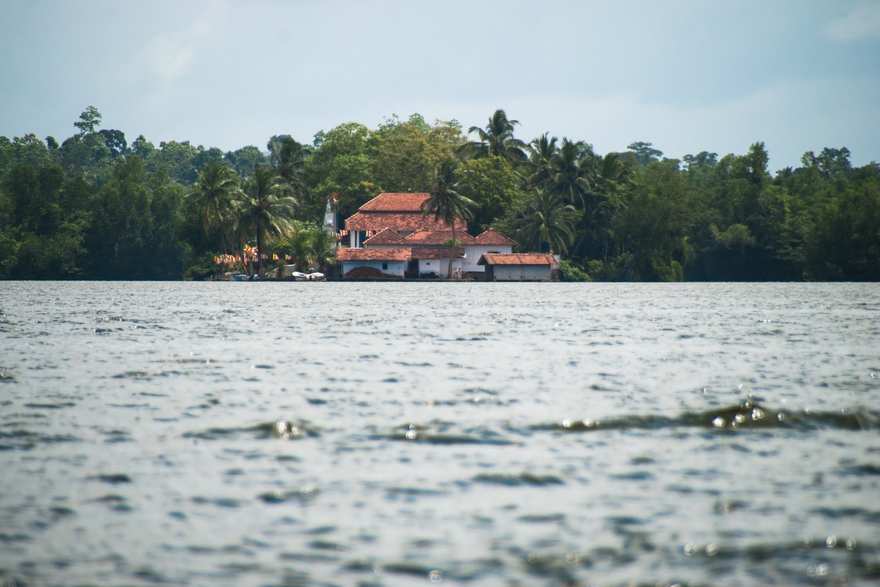
- Inhabited islands — several of the larger islands have households on them, reached only by boat. Children commute to school by canoe.
- Randombe Lake — a smaller water body connected to the main lagoon by two narrow channels, part of the same Ramsar site. Most tourist routes do not go there.
How long you actually spend ashore
| Stop | Time ashore | Cost | Worth it |
|---|---|---|---|
| Kothduwa temple | 15–20 min | Donation | Yes |
| Cinnamon island | 15–20 min | Free demo, paid goods | Usually |
| Fish spa | 10 min | Small extra fee | Novelty |
| Floating shop | 5–10 min | Tourist prices | Only if thirsty |
| Mangrove tunnel | No stop | Included | The reason you came |
Two hours of boat time is roughly one hour moving and one hour standing still. If a crew promises four stops in forty-five minutes, one of those numbers is wrong.
Sources
- Ramsar Sites Information Service — Maduganga Island count, Randombe Lake, protected vegetation
- Sri Lanka Export Development Board — Ceylon cinnamon Cinnamomum verum production and processing
- GetYourGuide — Madu River tour inclusions Which stops are included by product, checked 26 August 2026
Frequently asked questions
What is Kothduwa temple?
A Buddhist temple on an island in the Madu Ganga, reached only by boat. Local tradition links the site to the first higher-ordination ceremony of the Amarapura Nikaya, held on boats moored in this lagoon in 1803. It is an active place of worship, not a museum.
Do I need to cover up for the temple?
Yes. Shoulders and knees covered, shoes and hats off before the steps. A light scarf in your bag is enough. Nobody will refuse you at the jetty, but you will be the only person on the island who did not think about it.
Is the cinnamon island demonstration genuine?
It varies. Some are working smallholdings where the family peels bark daily; others are shops with a demonstration attached. The tell is the bark itself — a real operation has stacks of drying quills, a peeling bench with worn tools and offcuts underfoot, not just a display table.
What is the fish spa on Madu River?
A floating pen of small Garra rufa fish that nibble dead skin from your feet. It costs a small extra fee, takes about ten minutes and is entirely optional. Skip it if you have any open cuts.
Are there monkeys on the islands?
Yes, mainly toque macaques and langurs on the wooded islands. Do not feed them and do not let crews feed them for a photograph — habituated monkeys become aggressive and start raiding boats.
Can I get off the boat at every stop?
At the temple and the cinnamon island, yes. The fish spa is a floating platform you step onto. The mangrove tunnel is passed through without stopping. Some crews skip stops without saying so, which is why you agree the route before you leave.
Keep reading
- The Madu Ganga Mangrove Safari, ExplainedThe mangrove tunnel is the photograph everyone comes for, and it lasts about ten minutes. The other hundred are what separate a good boat trip from a bad one.
- The Ethics of a Madu River Boat TripA protected wetland with no gate, forty boats and no enforcement on the water. Most of the damage is casual rather than malicious, and most of it stops if a passenger asks.
- Madu River Wildlife — Birds, Monitors and What You Will Really SeeThe wetland supports 248 vertebrate species. A midday boat shows you four of them. What you see depends almost entirely on when you leave and how quietly your crew drives.
- Kosgoda Turtle Hatcheries — The Honest VersionTen minutes south of the Madu Ganga jetties, a row of turtle hatcheries takes almost every boat passenger who asks for a combo. Some do real conservation work. Some are aquariums with a donation box.