
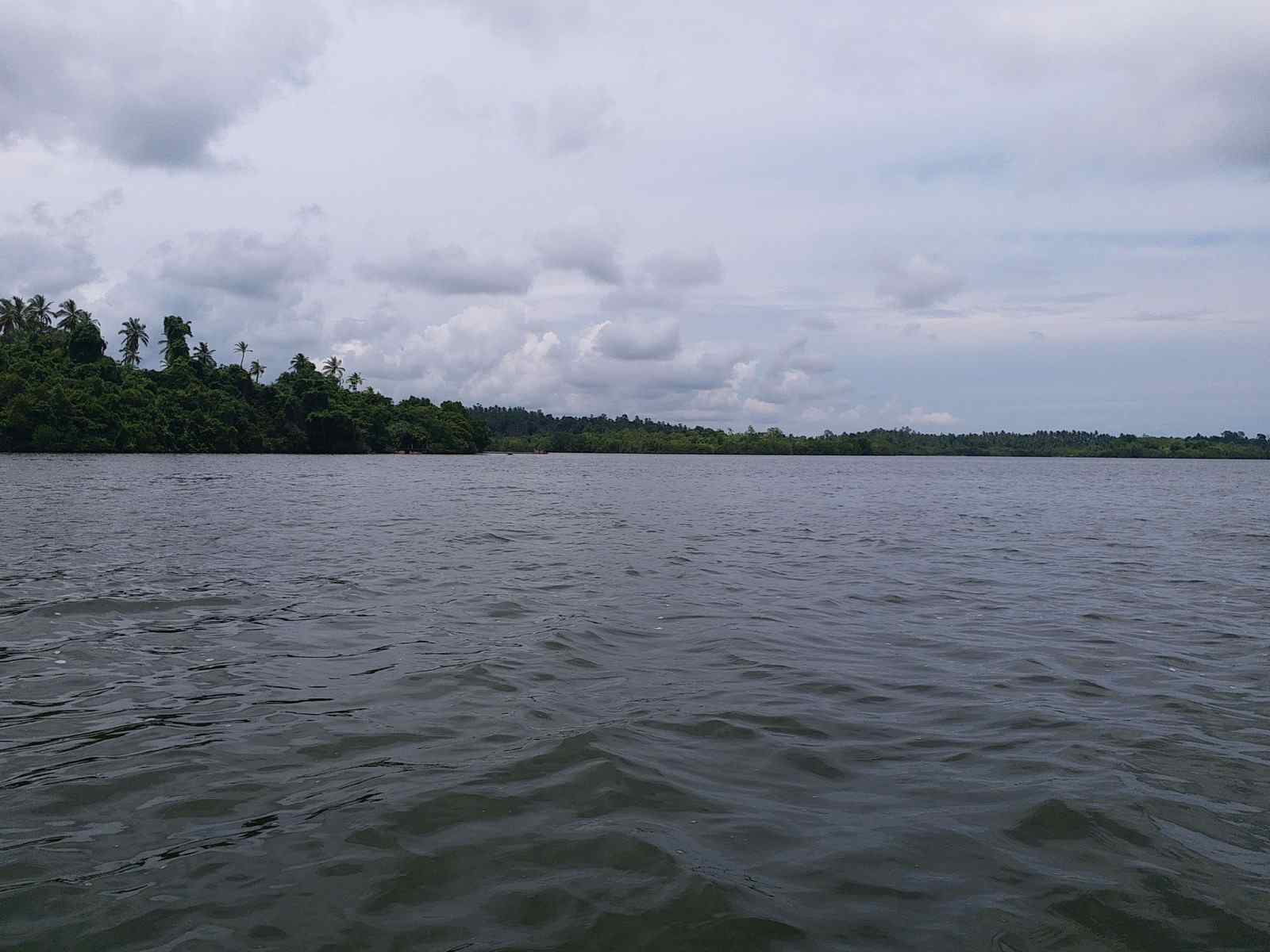
There is no ticket window on Madu Ganga and no published timetable. Boats run when passengers appear, which in practice means from around six in the morning until the light goes. That freedom is useful, and it also means nobody stops you booking the worst slot of the day.
Time of day: the only decision that really matters
06:30 – 09:00 — go now. Birds feed at first light. Kingfishers work the channel edges, egrets and herons stand in the shallows, monitor lizards warm up on branches before the day heats. The water is flat because the sea breeze has not started, so reflections work and the boat is steady. And the light is low enough to shoot into the mangroves without blowing out the sky.
09:00 – 11:00 — still good. Warmer, busier, more boats on the same circuit. Wildlife is thinning out but the tunnel and the temple are unaffected.
11:00 – 14:00 — the weakest slot. Overhead sun flattens everything, the open crossing is genuinely hot, and animals are in shade. You still get the tunnel; you get very little else.
14:00 – 16:00 — improving again. Light softens after three. Birds return towards dusk but not in the numbers you see at dawn.
Season: less decisive than people expect
Sri Lanka’s south-west coast runs on the south-west monsoon, which brings its rain roughly May to September. December to April is the dry, high season — the months hotels and tour operators build around.
What that means for a two-hour boat trip:
- December to April. The safe choice. Reliable mornings, busy jetties, higher prices for everything on the coast.
- May to September. Rain arrives mostly as heavy afternoon showers, not as all-day drizzle. Mornings are frequently clear, the estuary is greener, the jetties are quieter and everything is cheaper. Book online for the free cancellation and go early.
- October to November. The inter-monsoon. Unsettled, occasionally spectacular, genuinely unpredictable. Keep the day flexible.
Go in the wet season if
- You can commit to a 07:00 departure
- You want the lagoon at its greenest
- You are booking online with free cancellation
- You would rather have the tunnel to yourself
- You are price-sensitive about hotels as well as boats
Stick to December–April if
- Your trip is short and you cannot rearrange a rained-off day
- You are travelling with people who will not do an early start
- You want beach days on either side of the boat trip
- You are combining this with whale watching from Mirissa
- You are relying on a single fixed afternoon slot
How long to allow, door to door
Two hours on the water is the constant. Everything else is transfer time.
| Base | Transfer each way | Total to allow |
|---|---|---|
| Ahungalla, Kosgoda | 10–15 min | 3 hours |
| Induruwa | 15 min | 3 hours |
| Bentota, Beruwala | 20–25 min | 3.5 hours |
| Hikkaduwa | 30–35 min | 4 hours |
| Galle, Unawatuna | 35–55 min | 4.5–5 hours |
| Colombo, Negombo | 1 h 20 – 1 h 50 | Full day |
Add thirty minutes at the jetty if you intend to negotiate rather than arrive on a booking. Add another thirty if you are stopping at the Kosgoda turtle hatchery on the way back, which most people do.
Tides
The tide matters in one place: the narrow tunnels. High water reduces headroom and everyone ducks; very low water closes some of the side channels. The main circuit runs at any state of tide.
If you are shooting seriously, mid-tide on a rising water is the comfortable compromise — enough depth for the boat, enough clearance overhead. For everyone else, this is not worth planning around.
Days to avoid
- Poya days. Every full moon is a public holiday in Sri Lanka. Domestic visitors fill the jetties, particularly at Kothduwa temple, which is a working temple and busier than usual.
- Cruise-ship days in Galle. Coach parties arrive mid-morning and take the boats in blocks.
- Sri Lankan school holidays. April and August in particular.
None of these makes the trip bad. They all make 07:00 more valuable than usual.
What the timing gets you
A dawn boat is a wildlife trip: birds working the shallows, monitors on branches, mist on the water, the tunnel in soft light and possibly nobody else in it. A midday boat is a sightseeing trip: the same route, the same stops, none of the atmosphere. The price is identical.
Sources
- Department of Meteorology, Sri Lanka Monsoon periods and rainfall for the south-west coast
- Ramsar Sites Information Service — Maduganga Tidal influence and hydrology of the estuary
- GetYourGuide — Madu River departure times Published start times by product, checked 26 August 2026
Frequently asked questions
What time do Madu River boats start?
The first boats push off around 06:00 and the jetties are properly awake by 06:30. There is no ticket office and no opening ceremony — crews start when there are passengers. The last useful departure is about 16:00, giving you back before dark.
How long does a Madu River safari take?
Two to two and a half hours for the full circuit including the island stops. Shorter 45- and 60-minute loops are sold and skip the tunnel or the temple. Add travel time from your base, plus a margin for the tuk-tuk that is never quite where you left it.
What is the best month to visit Madu Ganga?
December to April is the driest window on the south-west coast and the most reliable. That said, the estuary is at its greenest just after the monsoon rains, and July and August mornings are frequently clear even in the wet season.
Does the safari run in the rain?
Yes, unless there is thunder or a squall. Most boats have some cover, and a monsoon shower on this coast usually lasts under an hour. If you booked online you can cancel free up to 24 hours before, which is the main advantage of pre-booking in the wet season.
Is Madu River busy?
At 07:00, no. By 10:00 there are several boats on the same circuit, and on Sri Lankan public holidays and cruise-ship days the jetties are crowded from mid-morning. Going early is the whole solution.
Can I do a sunset boat trip on Madu Ganga?
You can go out around 16:00 and get very good light on the way back, but crews are reluctant to be in the channels after dark and there is no formal sunset cruise product. Treat late afternoon as a photography slot, not a wildlife one.
Keep reading
- The Madu Ganga Mangrove Safari, ExplainedThe mangrove tunnel is the photograph everyone comes for, and it lasts about ten minutes. The other hundred are what separate a good boat trip from a bad one.
- Madu River Wildlife — Birds, Monitors and What You Will Really SeeThe wetland supports 248 vertebrate species. A midday boat shows you four of them. What you see depends almost entirely on when you leave and how quietly your crew drives.
- What to Bring on a Madu River Boat TripTwo hours in an open boat on the equator, with a temple stop and no shops. The list is short, but three items on it are the difference between a good morning and a miserable one.
- How to Get to the Madu River Jetties in BalapitiyaThere is no single Madu River terminal. Boats leave from a cluster of jetties on both banks near the Galle Road bridge, and they are not interchangeable.