
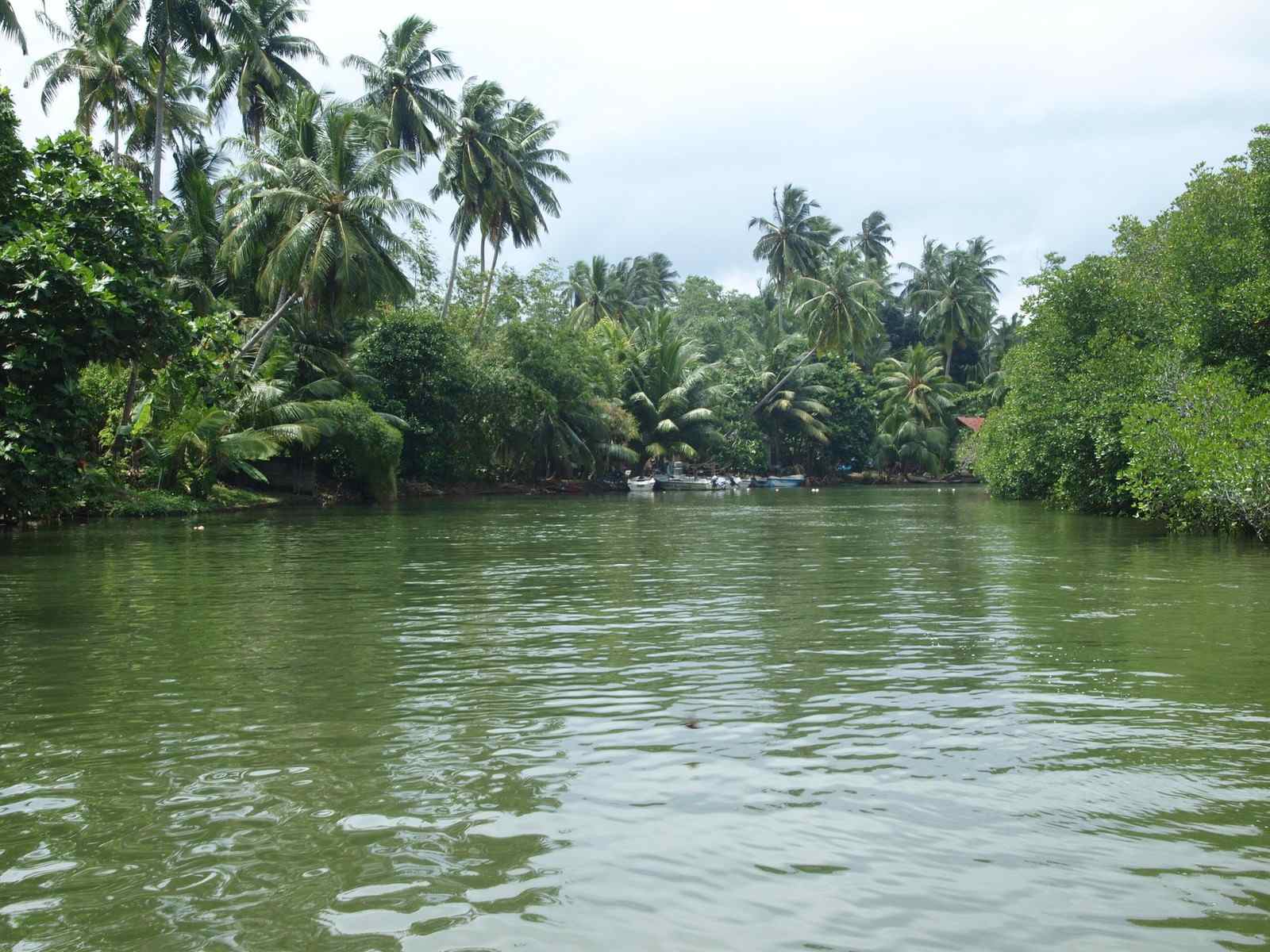
Most Madu Ganga operators list themselves in English because most of their paying customers arrive from Bentota with a hotel voucher. This one does not. Its Google listing carries the Sinhala name — මාදු ගඟේ බෝට් සෆාරි — and it appeared in five of our six searches, which is a strong showing for a business that is effectively invisible to anyone typing in English.
Who it serves
Sri Lankan domestic tourism on this coast is bigger than most foreign visitors realise. Weekends, school holidays, and every poya day bring families down from Colombo and Kalutara, and they are not searching in English or booking through international platforms.
A Sinhala-language listing is precisely how you reach that market. It follows that this jetty’s rhythms are different: busier at weekends, quieter on a Tuesday morning in high season, and priced for a market that knows what a boat should cost.
The southern bank
The jetty sits away from the cluster by the bridge, on the Ambalangoda side. Practical differences:
- Quieter. Fewer boats loading at once, no coach parties.
- Easier parking, which matters if you are self-driving.
- Less competitive negotiation. With fewer crews within earshot, the walk-away tactic has less force.
- Same water. The circuit is identical; the tunnel and the temple are where they are.
The language question, honestly
You will not have a problem arranging a boat. Numbers, times and destinations survive any language barrier, and every crew on this river has done this thousands of times.
What you may not get is the layer that makes the trip interesting: what the wooden fences in the shallows are for, why the mangrove roots look like that, what the temple’s connection to 1803 actually is. That commentary requires shared language and some inclination to give it.
If that layer matters to you, two options: ask directly at the jetty whether an English-speaking crew member is available, or book a product where a live guide is written into the inclusions rather than hoped for.
What to confirm
- Whether anyone on the boat speaks the English you need
- The route — mangrove tunnel, Kothduwa, cinnamon island — and the duration
- That the boat is small enough for the tunnel
- Life jackets, counted and sized
- The return time, said out loud
If you want guiding written down
Madu River Boat Tour and Cinnamon Garden Visit
Ceylon Nature Tours
Live tour guide listed in the inclusions, along with the mangrove circuit and the cinnamon island.
- 1–2 hours
- ★ 4.6 · 26
from $29
AvailabilityGalle: Madu River Boat Safari & Turtle Visit Experience
Taprobane Tours
Guided in English and Japanese, with pickup — the option if language is your main concern.
- 8 hours
- Hotel pickup
Worth noticing
The existence of this listing is a useful corrective to the way the river is usually described to foreign visitors. Madu Ganga is not a tourist attraction that Sri Lankans happen to live next to. It is a working estuary with a domestic visitor economy that predates the international one, and one of its more prominent operators does not bother advertising in English because it does not need to.
Frequently asked questions
Why is this operator listed in Sinhala?
Because most of its customers are Sri Lankan. Domestic tourism on this coast is substantial, particularly at weekends and on poya days, and a Sinhala listing reaches that audience directly. It also means the business is largely invisible to visitors searching in English.
Will the crew speak English?
Some will, at a practical level. Sinhala is the working language here. If you want detailed commentary on birds, mangroves or the temple in fluent English, ask before you book — or take a product with a guide written into the inclusions.
Is it cheaper than the tourist-facing operators?
Not reliably, but the opening ask to a Sri Lankan family and to a foreign couple are rarely the same number anywhere on this river. Divide any quote by your party size and compare it with the per-person online rate.
Where exactly is it?
On the southern bank, away from the main cluster by the bridge. Quieter, easier to park, fewer boats competing for the same passengers.
Is it worth seeking out?
If you want a less packaged morning and you do not need running English commentary, yes. If you want the trip explained, choose an operator or product where guiding is part of what you are buying.
Keep reading
- Madu River Boat Operators — Who Runs WhatThere is no association, no register and no grading. What exists is a row of jetties, about eleven business names that keep appearing in map searches, and a great deal of overlap between them.
- Madu River Boat Safari Prices — What It Costs in 2026There is no fixed price on Madu Ganga. At the jetty you rent a boat and haggle; online you buy a seat at a published rate. Understanding which market you are standing in is worth more than any number.
- How to Get to the Madu River Jetties in BalapitiyaThere is no single Madu River terminal. Boats leave from a cluster of jetties on both banks near the Galle Road bridge, and they are not interchangeable.
- Best Time to Visit Madu River — Hours, Season and DurationBoats run all day and the trip works all year. But the gap between a 06:45 departure and a 13:00 one is the difference between a wildlife trip and a hot boat ride.